
Woodson Panels
Sample Checkout Made High-Ticket Wall Panels Convert at 5+ ROAS
Woodson’s acoustic wood panels weren’t converting from Meta/Google. We rebuilt the storefront around samples and clarified PDP selection, helping paid demand reach 5+ ROAS.
4 min read0 to 7 Figures
Gross Sales
5.54× (Year 1+)
ROAS
120 days
Time to Self-sufficiency
Call for change
Woodson had a premium product, but cold traffic hesitated at checkout. Meta and Google could drive clicks, but the store experience didn’t reduce material risk or make selection feel obvious. Without a safe first step, high-AOV conversion kept stalling.
What happened
Woodson’s acoustic wood panels weren’t converting from Meta/Google. We rebuilt the storefront around samples and clarified PDP selection, helping paid demand reach 5+ ROAS.
The challenge
Woodson had a premium product, but cold traffic hesitated at checkout. Meta and Google could drive clicks, but the store experience didn’t reduce material risk or make selection feel obvious. Without a safe first step, high-AOV conversion kept stalling.
The results
High-ticket wall panels don’t lose on ads—they lose at the decision step. Buyers want to see finish, feel quality, and choose the right variant without second-guessing. We made “sample-first” the default path, then aligned paid + lifecycle so intent reliably graduates into full panel orders.
The approach
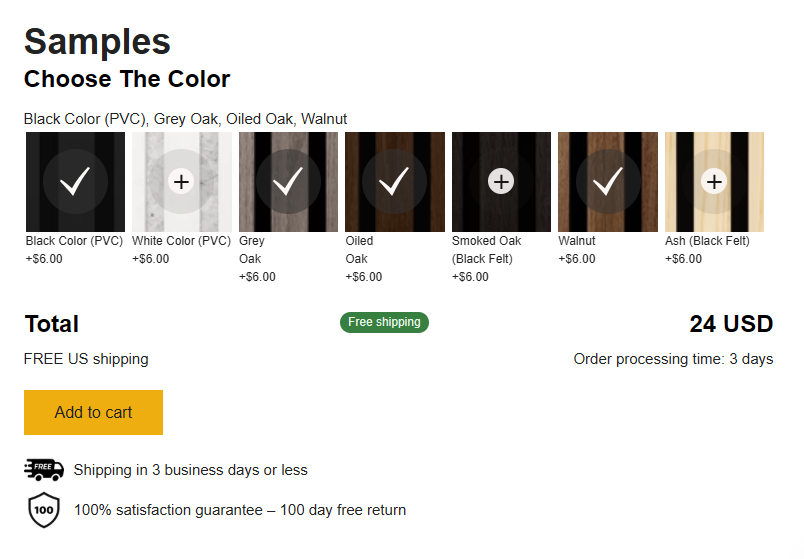
Sample-first purchase path: samples became the default “next step” so intent doesn’t die before commitment.
PDP + merchandising framework: tightened selection logic so buyers know what to buy and why (no guessing).
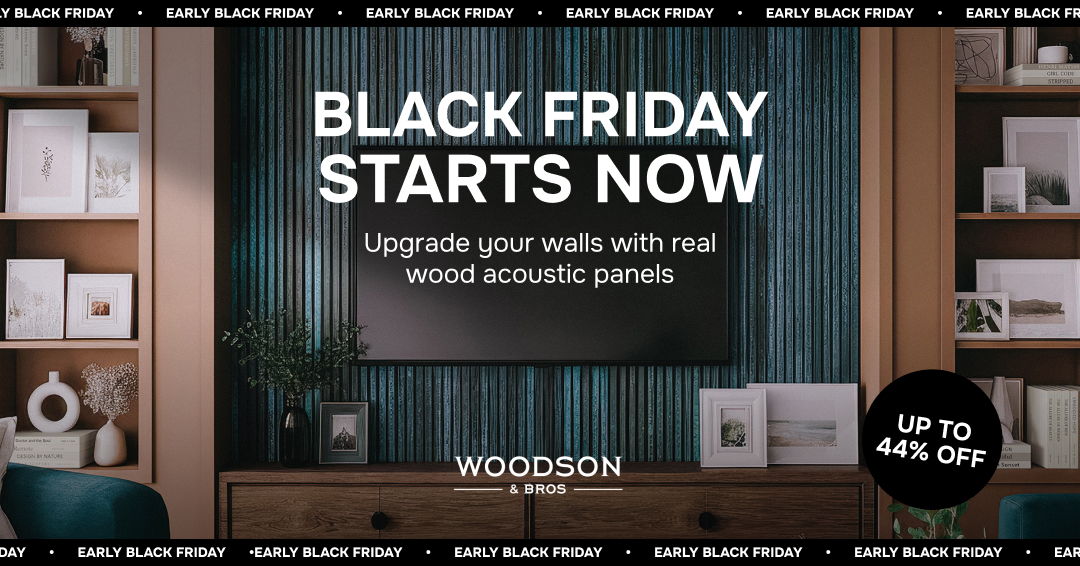
Visual credibility rebuild: room-realistic visuals to make the product feel tangible online.
Meta + Google restructure: campaigns mapped to intent stages instead of forcing cold high-ticket checkout.
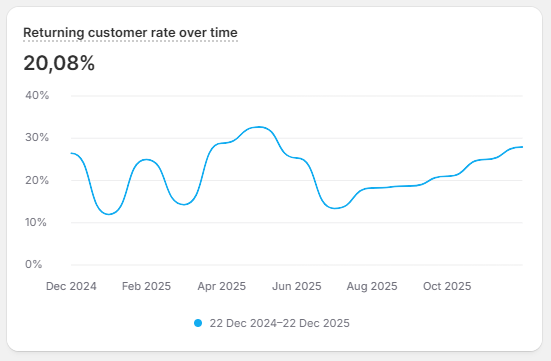
Lifecycle that graduates samples: flows + weekly campaigns to convert sample buyers into full orders.
B2C + B2B support: one store path that works for homeowners and trade buyers without friction.
Looking ahead
ROAS | 5+
Sample orders became the conversion bridge from “interested” to “confident purchase.”
Paid traffic stopped relying on persuasion and started relying on a controlled decision path.
Store experience supported both B2C checkout and B2B development without splitting into two sites.
Next is expanding the same “choose-with-confidence” PDP standard across more variants and room-use cases. With tighter segmentation between sample intent and purchase intent, paid efficiency stays protected. The sample-led engine becomes repeatable across new launches without re-learning the same conversion problem.
FAQ
Why does a sample checkout matter for high-ticket wall panels?
Because it removes the biggest conversion blocker: buyers can’t confirm finish and quality from ads alone. Samples turn “interest” into confident intent before the high-AOV decision.
Does pushing samples attract low-value buyers who never upgrade?
It can—if samples are treated like a cheap product. The fix is a designed graduation path: sample → guided selection → full panel purchase, with messaging and follow-up built to move them forward.
What changed on the PDP to make the high-ticket decision easier?
Selection clarity. Buyers need to understand what’s different, which option fits their space, and what to buy next—without guessing. The PDP must act like a salesperson, not a catalog page.
How do Meta and Google work differently in a sample-first funnel?
They stop being judged only by “cold high-ticket checkout” and start generating qualified intent through a low-friction first step. That keeps campaign structure cleaner and performance more stable.
How do you keep sample intent and purchase intent from contaminating each other?
Segmentation. Samples and high-ticket buyers behave differently, so audiences, messaging, and retargeting need to reflect that difference—or ROAS gets averaged down.
Will this work for both B2C and B2B buyers?
Yes, if the store path is built to support both. Homeowners need confidence and selection clarity; trade buyers need speed, specs, and an easy way to continue the conversation—without breaking the buying flow.
